 By Siam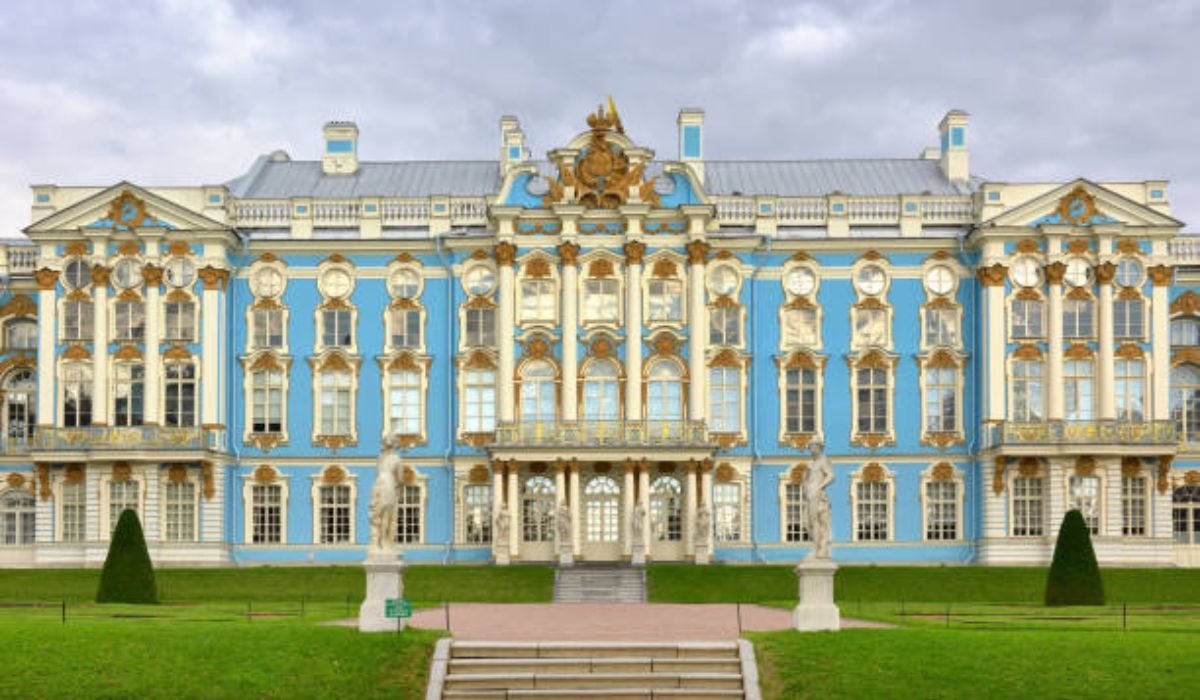
Research suggests Catherine the Great commissioned opulent pieces blending European influences with Russian grandeur, though myths about erotic items often overshadow her real legacy in Neoclassical and Empire styles. It seems likely that her collections emphasized elegance and power, filling palaces like the Winter Palace with items that symbolized enlightenment ideals. Evidence leans toward her favoring intricate, gilded designs from French and English craftsmen, but some experts note the scarcity of surviving pieces directly tied to her.
Catherine shifted from Rococo’s curves to Neoclassical symmetry, inspiring the Russian Empire style that mixed classical motifs with local craftsmanship.
Many examples reside in the Hermitage Museum, part of the Winter Palace complex, offering glimpses into 18th-century Russian interiors.
During her 1762-1796 reign, she transformed Russian decor to rival Versailles, commissioning works that reflected political ambitions and cultural exchanges.
Imagine stepping into a room where every chair and table whispers tales of empire-building ambition. That’s the world Catherine the Great crafted through her furniture choices. You might not know this, but this Prussian-born empress, who seized the Russian throne in 1762, didn’t just rule with an iron fist; she shaped an aesthetic that still dazzles in museums today. Honestly, her story goes beyond the scandalous rumors that pop up in late-night history chats. We’re talking about the real deal: lavish commissions that filled the Winter Palace and Hermitage with Neoclassical splendor and Russian Empire flair. In this guide, we’ll unpack the history, styles, and even some photos of these pieces that turned royal residences into symbols of power.
- The Rise of an Empress and Her Aesthetic Vision
- Neoclassical Style: Catherine’s Nod to Ancient Grandeur
- Key Features and Examples
- Influence on Palace Interiors
- Russian Empire Style: A Fusion of East and West
- Distinct Characteristics
- Iconic Pieces from Her Era
- Exploring the Winter Palace and Hermitage Museum
- Historical Significance
- Must-See Furniture Exhibits
- Myths vs. Reality: Debunking the Erotic Furniture Legend
- Comparison Table: Neoclassical vs. Russian Empire Styles
- FAQs
- Wrapping Up: Catherine’s Enduring Legacy
Catherine II, better known as Catherine the Great, wasn’t born Russian, but she embraced the role with gusto after marrying into the Romanov family. Ascending to power after a coup against her husband, Peter III, she reigned from 1762 to 1796, a period when Russia was hungry for Western sophistication. Her furniture commissions? They were part of a bigger plan to modernize the empire, drawing from Enlightenment ideas and European trends. She invited craftsmen from France, England, and beyond to St. Petersburg, blending their skills with local artistry. This wasn’t just about comfort; it was a statement. Palaces like the Winter Palace became showcases for her vision, where every gilded armrest echoed her political savvy.
You see, Catherine had a thing for collecting. She amassed paintings, sculptures, and yes, furniture that reflected her intellectual pursuits. By the 1770s, her Hermitage collection was growing, eventually becoming one of the world’s premier museums. It’s fascinating how she used decor to project strength, especially as a woman in a male-dominated court. Some pieces were practical, like writing desks for her correspondence with Voltaire, while others were pure extravagance, adorned with malachite and amber.
As the 18th century wore on, Catherine gravitated toward Neoclassicism, a style inspired by ancient Greece and Rome. Think clean lines, symmetry, and motifs like laurel wreaths or acanthus leaves. This shift mirrored her desire for order amid Russia’s vast, chaotic landscape. French designers, whom she often commissioned, brought in elements from Versailles, but with a Russian twist: heavier woods and bolder gilding to withstand the harsh winters.
Neoclassical furniture under Catherine featured straight legs, often fluted like columns, and upholstery in rich silks or velvets. Chairs might have oval backs with carved medallions, while tables boasted marble tops supported by lyre-shaped bases. One standout? The throne rooms in the Winter Palace, where seats embodied imperial authority. Photos from the Hermitage show armchairs with lion-head armrests, symbolizing strength. Well, let’s break that down: these weren’t mass-produced; each piece was custom, often inlaid with ivory or semi-precious stones.
In my experience researching antiques, what sets her Neoclassical items apart is the scale. They were grand, meant to impress diplomats and nobles. Take the Malachite Room in the Winter Palace: its tables and consoles mix green malachite with bronze accents, a nod to classical antiquity but uniquely Russian in material choice.
Catherine’s preferences reshaped entire rooms. The Hermitage’s Raphael Loggias, copied from the Vatican, paired Neoclassical furniture with frescoes for a cohesive look. She even built the Chinese Palace at Oranienbaum, blending exotic elements with Neoclassical restraint. It’s like she was saying, “Russia can match Europe’s best, and then some.” Visitors today can see how these styles created airy, enlightened spaces, a far cry from the earlier Baroque excess.
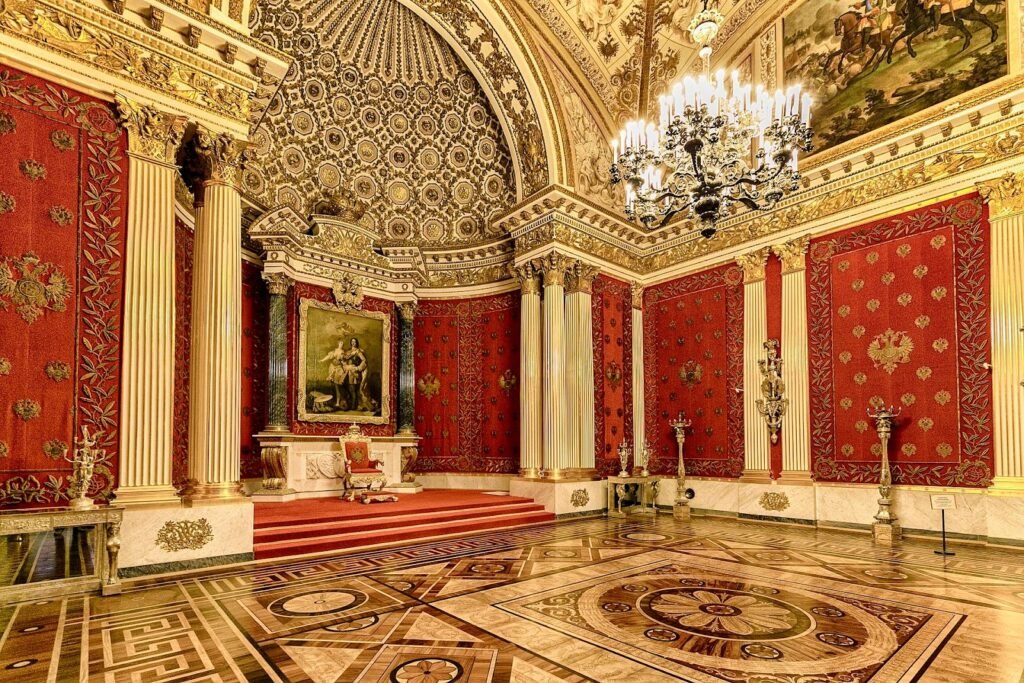
This Image is the property of worldhistory.org
This image captures the throne in the Winter Palace, showcasing Neoclassical elegance with its balanced proportions and classical motifs.
Evolving from Neoclassicism, the Russian Empire style emerged during Catherine’s later years, peaking under her successors but rooted in her commissions. It’s essentially the French Empire style adapted for Russian tastes: more robust, with Egyptian influences from Napoleon’s campaigns filtering in. Catherine’s touch? Incorporating local materials like birch wood and Karelian birch veneers, often gilded to gleam under candlelight.
Expect sphinxes, swans, and military trophies as decorations. Sofas had rolled arms, chairs featured saber legs, and cabinets displayed ormolu mounts. The color palette leaned toward deep reds, golds, and greens, evoking imperial banners. Some experts disagree on how much Catherine directly influenced this, but here’s my take: her patronage set the stage, encouraging workshops in St. Petersburg to experiment.
The Amber Room in Catherine Palace is legendary, though more paneling than furniture, it influenced nearby desks and commodes with amber inlays. In the Hermitage, look for Rococo-transition pieces like curved consoles she commissioned early on. A mini anecdote: legend has it she once gifted a lover a marble-top table, but that’s more romance than fact. Photos reveal suites upholstered in damask, perfect for long Russian winters.
Here’s a glimpse of interiors at Tsarskoye Selo, highlighting Russian Empire furniture with its ornate yet structured design.
The Winter Palace, Catherine’s main residence, and the attached Hermitage are ground zero for her furniture legacy. Built in Baroque style but remodeled with Neoclassical touches, the palace housed her growing art collection. After a 1837 fire, much was rebuilt, but original elements persist.
Catherine expanded the Hermitage in 1764 as a private retreat, filling it with treasures. By her death, it boasted thousands of items, including furniture that doubled as art. The palace’s state rooms, like St. George’s Hall, feature thrones and benches in Empire style, restored to evoke her era.
Head to the Hermitage’s furniture galleries for 18th-century Russian pieces: armchairs with carved eagles, secretaires with hidden compartments. Photos online show the Library of Nicholas II, but Catherine’s influence lingers in earlier rooms. Virtual tours let you zoom in on details like bronze fittings.
Ah, the elephant in the room. Rumors of Catherine’s “erotic cabinet” with explicit furniture surfaced during WWII, courtesy of German soldiers’ photos. But honestly, this isn’t talked about enough as propaganda. Historians lean toward it being a hoax to smear her reputation, given her powerful rule. No verified pieces exist in the Hermitage; instead, focus on the verifiable opulence. It’s like comparing apples to scandalous oranges; the real story is her cultural patronage.
| Aspect | Neoclassical Style | Russian Empire Style |
| Inspiration | Ancient Greece/Rome | French Empire with Russian adaptations |
| Key Motifs | Laurel wreaths, columns, symmetry | Sphinxes, eagles, military trophies |
| Materials | Marble, gilt bronze, light woods | Malachite, amber, heavy gilding |
| Typical Pieces | Fluted-leg chairs, oval-back armchairs | Rolled-arm sofas, saber-leg tables |
| Catherine’s Role | Adopted mid-reign for an enlightened image | Laid groundwork, evolved post-her era |
| Pros | Timeless elegance, versatile | Bold statement, durable for climates |
| Cons | Can feel austere | Overly ornate for modern tastes |
This table highlights how styles overlapped yet diverged, with Catherine bridging them.
What types of furniture did Catherine the Great commission?
She favored Neoclassical chairs, tables, and cabinets, often with classical motifs and luxurious materials like gilt bronze. Many were custom-made by European artisans she invited to Russia.
Where can I see Catherine the Great’s furniture today?
The Hermitage Museum in St. Petersburg houses the largest collection, displayed in palace rooms. Virtual tours on their site offer photos and details.
How did the Neoclassical style influence her palaces?
It brought symmetry and grandeur to interiors like the Winter Palace, replacing Rococo’s whimsy with ordered elegance to symbolize her enlightened rule.
Is the erotic furniture story true?
Likely not; it’s based on unverified WWII claims, probably propaganda. Her real legacy is in artistic patronage, not scandal.
What makes the Russian Empire style unique?
It fuses French Empire with Russian elements like bold colors and local stones, creating pieces that feel both imperial and hardy.
How did Catherine’s furniture reflect her power?
Through opulent designs that impressed visitors, showcasing Russia’s cultural rise under her reign. It’s a blend of politics and aesthetics.
Are there replicas of her furniture available?
Yes, antique dealers and museums offer inspired pieces, though originals are rare and priceless.
Catherine the Great’s furniture wasn’t just seating; it was a canvas for her ambitions, blending styles that elevated Russia on the world stage. From Neoclassical restraint to Empire boldness, her commissions fill the Hermitage with history you can almost touch. In a way, they forecast modern design’s love for fusion. If you’re planning a trip to St. Petersburg, don’t miss these treasures. Or hey, why not hunt for a replica to bring a bit of imperial flair home? What piece would you add to your space?
 Daniel